
 Sydney Metzmaker
The Fast Path to Impact: What Federal Agencies Really Need to Unlock Technology Value

By Sydney Metzmaker Federal agencies certainly don’t lack mission urgency, but when it comes to technology, what they often are missing is a clear,...



At PVM, we use data to make a difference in our communities. We are looking for talented people who thrive working on some of the world's toughest challenges.
View our openings to find out how you can join our team.


OUR MISSION
Our goal is to unleash the power of data and connect people to information to make a difference in the communities we serve.

By Sydney Metzmaker
I’ve noticed a pattern in conversations about artificial intelligence (AI)—especially in government and mission-driven organizations. The people who are most uncomfortable talking about AI are often the very people who are closest to being ready for it.
That discomfort isn’t ignorance. It isn’t resistance to change. More often, it’s recognition—an instinctive understanding that something powerful is emerging, and that it matters.
When AI scares you, it’s usually because you can see its potential.
When someone reacts strongly to AI—whether with skepticism, frustration, or outright concern—it’s tempting to label that reaction as fear of the unknown. But in my experience, it’s usually the opposite.
People don’t get upset about technologies they believe are irrelevant, but instead when they recognize value—and worry about what that value might disrupt.
In today’s world, the impact of AI is undeniable. We see it everywhere: writing assistance, data analysis, decision support, automation. Most people already use AI in some form, whether they admit it or not. Tools like ChatGPT, Copilot, and Palantir AIP features are becoming part of everyday workflows.
That’s the first signal ofreadiness: curiosity.
The second signal? Concern.
When you listen closely, most AI anxiety boils down to one question:
Is this going to replace me?
That fear is especially understandable in mission-critical environments, where human judgment, accountability, and expertise aren’t just important—they’re essential.
Here’s the truth: AI is not meant to replace human decision-making. It’s meant to enhance it.
AI is at its best when it removes friction—surfacing insights faster, connecting information more intelligently, and freeing people to focus on the decisions that actually require experience, context, and judgment.
The fact that people recognize how powerful AI can be is exactly why it makes them nervous. And that nervousness is a sign they’re paying attention.
If you’re wondering whether your organization is “ready for AI,” don’t look for perfection. Look for signals:
If a large portion of your workforce is already using AI in some capacity, the conversation isn’t whether to adopt—it’s how to do it responsibly.
That’s where many organizations get stuck.
One of the biggest barriers to adoption in government and regulated environments is trust—and rightly so. You can’t (and shouldn’t) use public, consumer-grade AI tools to analyze sensitive data, proprietary documents, or classified workflows.
But that doesn’t mean AI isn’t applicable. It means it needs to be purpose-built, secure, and governed.
When AI is deployed inside a controlled platform like Palantir AIP—one that can connect to multiple data sources, respect access controls, and operate within security boundaries—it unlocks entirely new possibilities. Suddenly, teams can:
This isn’t about replacing people. It’s about enabling them to do things they couldn’t do before.
Being “ready for AI” doesn’t mean rushing headfirst into automation. In fact, the most successful organizations take a measured approach:
Fear doesn’t disappear overnight—but it doesn’t have to. When leaders acknowledge concerns, explain intent, and show real value, fear turns into confidence.
Discomfort is often the first step toward transformation. If AI is making your organization uneasy, it’s likely because you already understand its potential—and the cost of ignoring it. That awareness is not a weakness. It’s readiness.
The question isn’t whether AI belongs in your mission.
It’s how you choose to bring it in—thoughtfully, securely, and in service of the people who carry that mission forward every day.

By Sydney Metzmaker Federal agencies certainly don’t lack mission urgency, but when it comes to technology, what they often are missing is a clear,...
By Sydney Metzmaker I’ve noticed a pattern in conversations about artificial intelligence (AI)—especially in government and mission-driven...
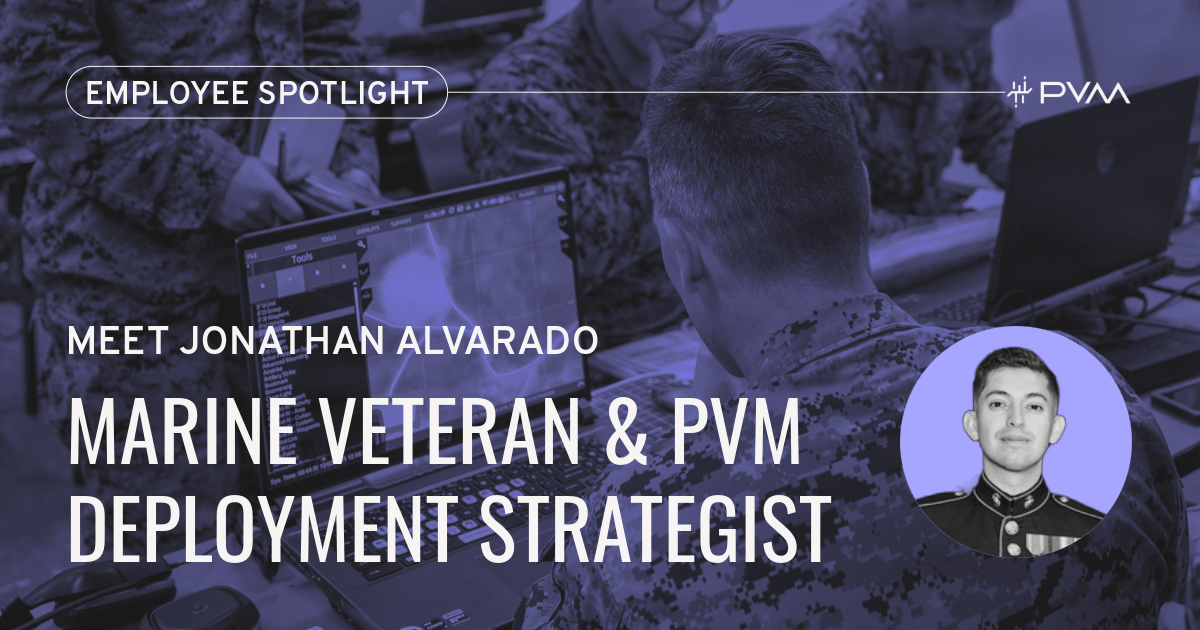
From the flight lines of Japan to embassy operations across Europe and Africa, former Marine Corps intelligence specialist Jonathan brought a...
